 Reviews



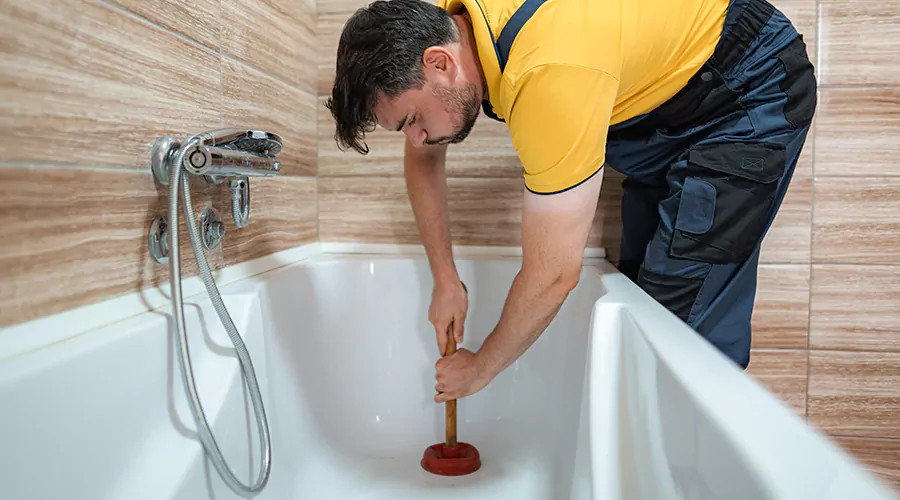
You can often unclog a bathtub drain in less than an hour by removing hair around the stopper before plunging or snaking the pipe. Professional bathtub drain clearing costs about $150 to $350 in 2026. Most tub clogs develop when hair collects soap residue inside the drain.
A slow bathtub usually gives you time to act before the drain closes completely, making drain unblocking a practical first step. The best first move is physical removal. Hair caught close to the stopper can often be pulled out without chemicals or pipe disassembly.
What Usually Clogs a Bathtub Drain?
Bathtub clogs usually begin with hair caught around the stopper or drain crossbars. Soap residue binds the strands together. Over time the mass becomes large enough to restrict normal water flow.
- A tub can collect more hair than you expect because every bath or shower sends loose strands toward the same small opening.
- Residue from body products can make the blockage stickier.
- Mineral deposits can also narrow the opening over time.
The keyword clogged bathtub drain describes the later stage when this buildup has already restricted water flow. Most of these blockages sit close enough to the fixture for basic mechanical tools to reach them.
How Does a Bathtub Drain Clog Progress?
A bathtub clog usually begins as slightly slower drainage. Water then starts collecting around the drain during use. A full blockage develops when the remaining opening becomes too small to carry the incoming water.
| Stage | What You Notice | Likely Condition | Typical 2026 Cost |
|---|---|---|---|
| Early | Water drains more slowly | Hair starting to collect | Often DIY |
| Partial | Water pools around feet | Larger hair mass | $25 to $50 DIY |
| Heavy | Water stays after use | Dense obstruction | $150 to $350 |
| Deeper | Other fixtures slow | Shared drain issue | Can cost more |
- A basic DIY bathtub unclogging project can cost about $25 to $50 in tools. Professional clearing commonly runs about $150 to $350 in 2026.
- The advantage of acting early is access.
- Hair near the stopper is much easier to remove than material packed farther into the trap.
What Are the Signs of a Bathtub Drain Clog?
A bathtub drain usually shows measurable changes before it stops completely. Watch the drainage speed during normal use rather than waiting for standing water to remain after the tub is empty.
- Water begins collecting during a shower. The drain cannot carry water at the normal rate.
- The tub takes several minutes to empty. A partial opening still remains.
- Hair is visible beneath the stopper. The obstruction may be close to the surface.
- The drain gurgles while emptying. Restricted airflow can accompany a blockage.
- Water leaves a dirty ring behind. Slow drainage keeps residue in contact with the tub longer.
- The drain improves after removing surface hair. The obstruction is concentrated near the opening.
- The clog returns within a few days. More material probably remains deeper inside.
- The stopper moves poorly. Hair may be wrapped around its mechanism.
- Another drain also becomes slow. The problem may extend beyond the bathtub.
- Water does not move at all. The drain may be fully obstructed.
A sudden change in more than one fixture deserves more attention than a single slow bathtub.
What Should You Do Before Unclogging the Tub?
Remove standing water before taking apart the stopper. Leave only enough water to cover a plunger cup if you plan to plunge later. Wear gloves because the material under the stopper often contains wet hair and organic residue.
- Identify the stopper type first.
- Common designs include lift-and-turn units or toe-touch stoppers.
- Some tubs use a trip lever connected through the overflow opening.
- Different stopper designs come apart differently.
- Do not force a stopper that does not move.
A damaged stopper creates a second repair that was not part of the original clog.
How Do You Remove Hair From a Bathtub Drain?
Removing hair directly is usually the fastest way to unclog bathtub drain buildup near the opening. Pull the stopper first. Then use gloved fingers or a flexible barbed drain tool to lift material upward.
- Inspect the stopper shaft.
- Hair often wraps around the lower section.
- Check the drain crossbars next.
- Insert a plastic hair-removal tool several inches into the opening.
- Rotate the tool slightly.
- Pull it back slowly.
- Place the removed material in the trash.
- Repeat until little debris comes back.
A current 2026 bathtub guide identifies stopper removal and physical hair extraction as the first practical steps. Do not rinse the removed hair into another drain.
How Do You Plunge a Bathtub Drain?
A plunger can move a blockage when the drain remains slow after visible hair has been removed. The bathtub overflow must be sealed first or much of the pressure will escape through that opening.
- Add enough water to cover the plunger rim.
- Cover the overflow opening with a wet cloth.
- Place a flat cup plunger over the drain.
- Press down firmly.
- Pull upward without breaking the seal.
- Repeat for about 30 seconds.
- Then remove the plunger.
- Watch whether the water drains faster.
Sealing the overflow is the tub-specific detail that makes plunging more effective. A loose overflow seal can make a good plunger look ineffective.
How Do You Snake a Bathtub Drain?
A manual drain snake is useful when the blockage sits beyond the stopper area. For many tubs the overflow opening gives the cable a straighter route toward the trap than the lower drain opening.
- Remove the overflow plate.
- Pull out the linkage if your tub uses one.
- Feed the cable into the overflow opening.
- Advance it until resistance appears.
- Lock the cable.
- Rotate the drum slowly.
- Advance another short section.
- Pull the cable back carefully.
- Remove captured hair.
- Run water to test the drain.
The keyword snaking a drain applies directly to this deeper clearing step. Do not force the cable when it hits a rigid stop. A pipe bend can feel similar to a clog.
Should You Pour Drain Cleaner Into the Tub?
Chemical drain cleaner should not be your first response to a hair clog. Mechanical removal gives you more control because the actual material comes out of the pipe. Chemical liquid can also remain in standing water if it fails to clear the blockage.
- Never mix different drain products.
- Avoid combining drain cleaner with bleach.
- Do not snake a drain containing an unknown chemical.
- Wear eye protection if a chemical product is already present.
Current safety guidance warns that chemical cleaner inside a fully blocked drain can create a hazard when a snake is inserted later. A dense hair mass is usually better pulled out than dissolved in place.
How Can You Test Whether the Clog Is Gone?
A cleared bathtub should drain continuously while the faucet runs. Test gradually because a partial opening can handle a small trickle while failing under normal flow.
- Start with a low flow rate.
- Watch the drain for about one minute.
- Increase the water flow.
- Continue for several minutes.
- Stop the water.
- Observe how quickly the remaining water disappears.
The tub should not develop a growing puddle. A current bathtub guide recommends testing flow after every clearing attempt rather than assuming the drain is open.
When Should You Call a Professional?
Professional help makes sense when a hand snake cannot restore normal flow or the clog quickly returns. Multiple slow fixtures can indicate a larger drain-line problem that basic bathtub tools cannot reach.
Professional bathtub drain clearing costs about $150 to $350 in 2026. A full bathtub or shower drain replacement costs about $500 to $1,020 when the drainage hardware or piping itself needs replacement.
Get deeper diagnosis when:
- More than one fixture drains slowly.
- Dirty water returns through the tub.
- A hand snake does not improve flow.
- The blockage returns within days.
- The drain pipe appears damaged.
- Water leaks below the bathtub.
A clog and a damaged drain are different repairs.
How Can You Prevent Another Bathtub Clog?
A drain cover can keep much of the hair from reaching the waste pipe. Clean the cover frequently because a hair-filled screen can slow drainage even when the pipe underneath remains clear.
- Remove hair after each use when practical.
- Clean around the stopper regularly.
- Watch for slower drainage.
- Remove early buildup before standing water develops.
- Avoid washing loose debris into the tub.
- Clean the drain opening before the problem becomes severe.
Current 2026 guidance recommends a hair-catching drain cover as one of the simplest prevention methods.
Conclusion
Knowing how to unclog a bathtub drain starts with the material closest to the stopper. Remove visible hair first. Seal the overflow before plunging. Use a hand snake through the overflow when the obstruction sits deeper. A drain that repeatedly blocks or affects other fixtures may need deeper diagnosis. This week, remove your tub stopper and clean the hair around it before the buildup becomes a full blockage.
Frequently Asked Questions
Can a bathtub clog clear itself?
A small soap buildup can loosen over time. A dense hair mass normally stays in place until it is physically removed.
Why does my bathtub drain slowly only during showers?
The drain may carry low flow but fail when water arrives faster. That pattern usually means a partial blockage remains.
Can I snake through the bathtub drain opening?
Sometimes. The overflow opening often gives a straighter route into the trap and reduces cable difficulty.
Can hot water unclog a bathtub?
Hot water can rinse loose soap residue. It will not reliably remove a packed hair blockage.
How often should I clean the tub drain?
Clean visible hair whenever drainage starts slowing. A hair catcher should be emptied frequently.